WACC believes communication rights are in the DNA of digital justice, gender justice, and climate justice – but too many communities are invisible and too many voices are silenced in the world today. Here are highlights from our work in 2025 to enable people to be seen and heard.



MESSAGE FROM THE GENERAL SECRETARY
WACC – A moral beacon for communication justice
Global challenges like digital transformation, gender equality, and climate action can only be tackled when the right to information and communication underpin decision-making processes founded on human dignity and equality. That is what WACC stands for.

Digital Justice |

Gender Justice |

Climate Justice |

Our Financials |

Our People |

Our Network |
COMMUNICATION
JUSTICE
In 2025 WACC published four issues of our international journal Media Development. Readers could explore contemporary communication issues through a social justice lens, with perspectives from the Global South and marginalized communities.

Wanted: Communication justice worldwide
Civic space allows civil society to play a role in political, economic and social life. We must listen to the voices of ordinary people and respond radically to their concerns.

Artificial intelligence: Friend or Foe?
It may seem we can't do much about tech's far-reaching and unpredictable impact. But we need to think ethically, act transparently, and raise awarenesss about AI development.

A peaceful and just future for all.
What's at stake in the WSIS+20 review process? A just, effective, and lasting rights-based framework for global communications that enables people everywhere to be seen and heard.

Responding to an existential threat.
Climate justice means ensuring communities hardest hit by climate change and environmental destruction have a public voice. And we need independent, unbiased climate information.
Information for migrants by migrants
Our “You Are Not Alone” joint project with the Asia Pacific Mission for Migrants is bearing fruit!
🗺️ Identified policy gaps in anti-trafficking mechanisms in seven countries in the region
ℹ️ Started a citizen reporter network so migrants at risk of trafficking and exploitation have accurate, culturally relevant, and timely information about their rights and access to services
🌐 Launched an online community where people on the move can find guidance and support

25
WACC COMMENT PIECES
49
COMMUNICATION FOR ALL
PROJECTS
61
WEB ARTICLES
12
PUBLIC INTERVENTIONS
LOCAL VOICES, LOCAL ACTION FOR COMMUNICATION JUSTICE

ECUADOR
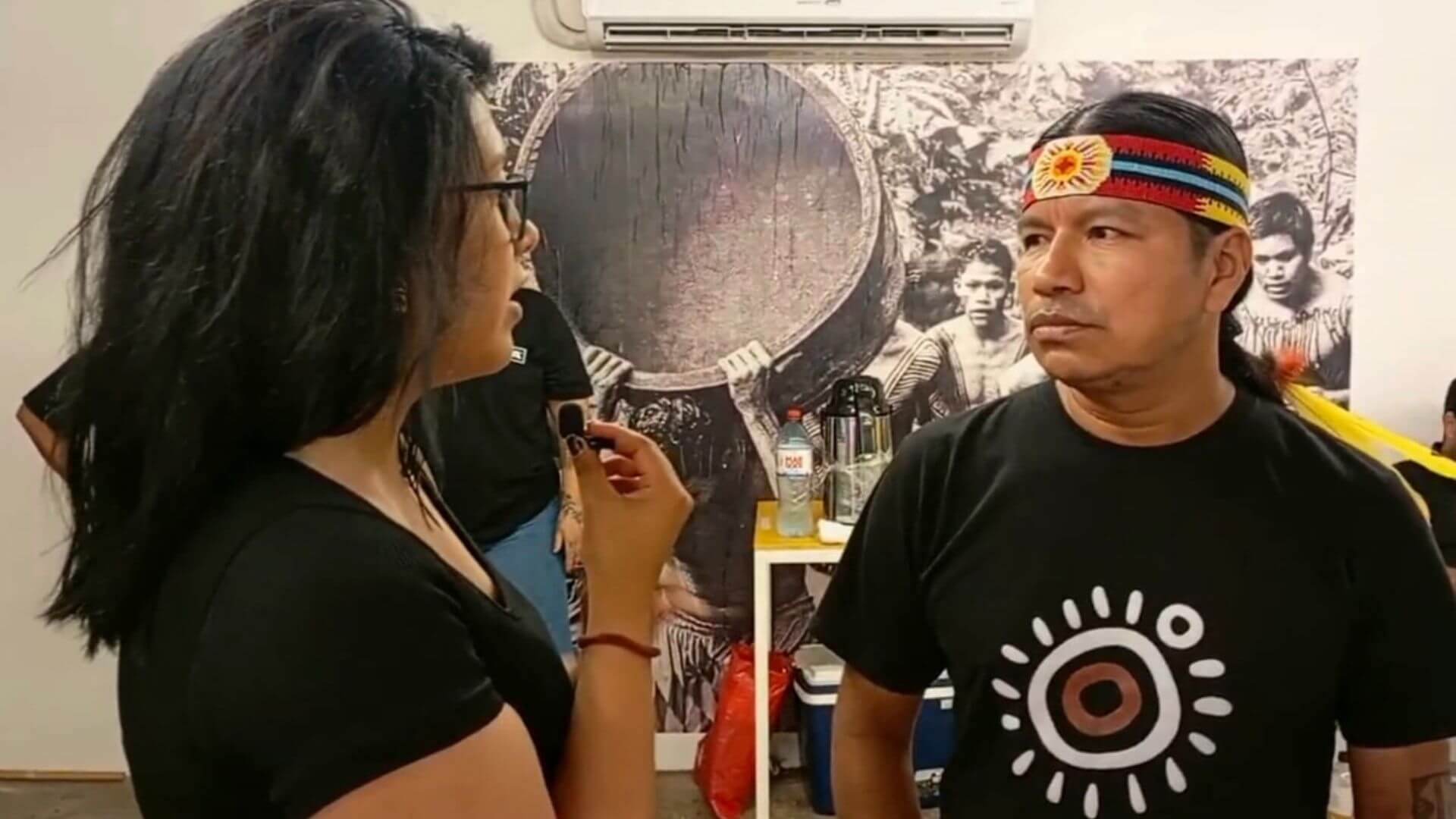
A communication school run by the Kichwa Nation has equipped Indigenous activists in eight Latin American countries to better defend their lands.
Read More
KENYA
An Indigenous community radio station established by Fereiti Action Network is serving as information channel and cultural link for the Rendille people.
Read More
NICARAGUA
The agrarian cooperative CASEMIP RL strengthened advocacy by Indigenous radio reporters for their communtities' rights through hands-on training.
Read More

LEBANON
Accompanied by the Anti-Racism Movement, Palestinian and Syrian woman and girls on the move used media to tell their stories.
Read More
ARGENTINA
ALC Noticias brought the lived experiences of migrant women and girls in Latin America to the public ear through the ``Path to a full life`` podcast.
Read More


DIGITAL JUSTICE
We need a new digital paradigm – rooted in communication rights and built to serve public interest, not private profit. WACC and partners advocated for Communication for All: From Connectivity to Community during the 20-year review of the World Summit on the Information Society WSIS+20.


WSIS+20
From the grassroots
WACC partners and young scholars at WSIS+20 were clear: digital justice must be central.
We need bottom-up digital solutions shaped by communities. Civil society needs to be heard and supported. There can be no innovation without justice, inclusion, and equity. And we must take action together.

Communication is aid.
Communication in humanitarian situations is often under threat or denied. Our joint WSIS +20 event named 3 steps to protect and promote this fundamental right.

Diverse voices.
Our partners from Costa Rica, the Philippines, and Zimbabwe talked about the vision for digital justice that guides their work at an ecumenical WSIS+20 side event.

Communication rights.
In his WSIS+20 Leaders Talk, the WACC general secretary stressed that we can’t have just and inclusive digital societies without communication justice.

WACC innovation recognised.
Our “Voices of the Amazon” and “Stop Tech-Facilitated Gender-Based Violence” projects were WSIS+20 Prize 2025 Nominees!

New paradigm.
A new WACC publication ahead of WSIS+20 guides civil society in developing a rights-based, democratic framework for the digital age.

Building momentum.
WACC’s Conversation Circle in December asked 6 questions to reclaim the digital agenda post-WSIS+20.
Digital justice for everyone
Digital media literacy is the first step towards digital justice. That’s why we launched Module 2 of our Just Digital e-course during UNESCO’s Global Media and Information Literacy Week last year. With “Taking control, making a difference,” learners can become digital advocates and take action for a more just digital world.
We also rolled out full Spanish and French versions of Just Digital Module 1 – “Big Issues in Small Bytes” – so more individuals and communities around the world can be informed users and advocates for digital justice.

LOCAL VOICES, LOCAL ACTION FOR DIGITAL JUSTICE

INDIA
Digital literacy courses by Ideosync Media Combine have amplified the voice of Indigenous Soliga communities.
Read More
COSTA RICA
Cooperativa Sulá Batsú has helped the woman leaders of the Cabécar nation use digital technologies to connect younger generations with their Indigenous identity.
Read More
ZIMBABWE
Gender and Media Connect bolstered gender equality by addressing barriers to digital inclusion faced by women journalists in Southern Africa.
Read More


DIGITAL JUSTICE IN THE REGIONS
Just digital questions from regional contexts
How do tech and faith intersect in the digital age? Should churches and NGOs be active on social media given the ethical concerns? How can we bring the voices of younger scholars on equitable tech governance into global policy conversations? See how our regional associations worked for digital justice last year.


GENDER JUSTICE
Progress towards gender equality in and through the media is at a crossroads 30 years after the adoption of the Beijing Platform for Action. In 2025 WACC and partners took the gender pulse of news media worldwide during the 7th GMMP and initiated a strategic reset.


GMMP+30
Wake-up call & roadmap for change
Since 1995, the Global Media Monitoring Project (GMMP) coordinated by WACC has given consistent evidence on gender in the news. The 30th anniversary edition last year showed progress at a standstill.
In response we launched a strategic rethink with our worldwide GMMP network – innovating to confront structural barriers, stop violence against women journalists, and spur a media shift from profit to human rights.
.

Evidence for change.
The GMMP 2025 Global Report presents gender equality in and through the world news media across 30 years of media monitoring. Regional and national reports from the GMMP network provide findings and analysis from contexts around the globe.

Presenting findings, naming change.
During the launch of the GMMP 2025 Global Report in December, we considered findings and heard voices from West & Central Africa, the Caribbean, and Latin America about what a radical path forward could entail.

A Beijing+30 reflection.
Three decades since the Beijing Platform for Action was adopted – the evidence from the GMMP makes it clear that the way forward has, of necessity, to be radically different.

The gender pulse of news.
Media monitoring for the 7th GMMP took place on 6 May 2025 – 94 countries participated!

GMMP+30 Photo(s) of the Day.
On monitoring day, thousands of volunteers gathered evidence of the representation and portrayal of women and men in more than 30,000 news articles across eight regions of the world. See them at work.
Call for renewed framework
Inequality in and through media persists despite the commitments of the Beijing Platform for Action in 1995.
With the Global Alliance on Gender and Media, we called for reform of the global framework at the UN Commission on the Status of Women 30 years later. At our parallel event, GMMP coordinators and WACC partners from Africa, Asia, Latin America, and Palestine outlined action to safeguard women’s communication and digital rights.

LOCAL VOICES, LOCAL ACTION FOR GENDER JUSTICE

PAKISTAN
Uks Research Centre raised awareness about tech-facilitated gender-based violence and laid the foundation to create a safer online environment for all.
Read More
NIGERIA
Journalists for Christ brought online misogyny and violence against women into the mainstream as priority public policy issues.
Read More
BOSNIA & HERZEGOVINA
Association ``Novi Put`` has changed the lens of how media cover gender-based violence – and how the next generation of journalists is being taught.
Read More

MEXICO
CIMAC has placed media’s social responsibility for gender-sensitive reporting – particularly of violence against women – onto the public agenda.
READ MORE
NIGERIA
MEGEIN spotlighted the extent and impact of misogynistic narratives on social media and equipped users to challenge online hate.
READ MORE
GENDER JUSTICE IN THE REGIONS
Who Makes the News in Europe?
How are women represented in the media in Europe? Through two online discussions, our regional association looked at progress that has been made – or not – towards gender justice and explored how communicators can shape gender-sensitive media.


CLIMATE JUSTICE
There is no climate justice without communication justice. WACC and partners amplified local climate voices at the UN Climate Change Conference COP30 and backed initiatives to stop climate disinformation.

COP30
A local-first approach to media
Communities on the front lines of climate change and action must be at the center of climate conversations.
The WACC-supported community media team at COP30 delivered reliable, timely, and accurate information featuring local climate voices. The reporters linked climate governance and everyday realities – and reached up to 12 million listeners throughout Latin America.

Why we need community media on the global stage.
Media coverage of global events often focuses on high-level dialogue. But community reporter Yorman Galviz saw at COP30 that community media are key to climate justice initiatives at the grassroots being seen and heard.

Communication is fundamental to climate justice.
Every moment Nicolle Mendoza spent at COP30 underlined how important is the work of community media journalists like herself to ensure the voices of climate-affected communities are heard around the world.

The climate crisis – also a crisis of listening.
Community reporter Steven Santiesteban left COP30 convinced that it’s time to pass the climate microphone to the communities who are guardians and witnesses of the land.
LOCAL VOICES, LOCAL ACTION FOR CLIMATE JUSTICE

PHILIPPINES
With training as citizen journalists by the Communication Foundation for Asia, Alangan-Mangyan leaders are raising awareness of traditional ecological knowledge.
Read More
MEXICO
Indigenous and environmental activists in Mexico and beyond have broadened advocacy work thanks to La Sandia Digital's 4th School of Strategic Communication.
Read More
FINANCIALS
In the face of increasing challenges worldwide, WACC’s Board and staff exercised careful financial stewardship, ensuring that every resource entrusted to us delivered the greatest possible impact in advancing communication justice in 2025. We continued to work closely with friends and partners to diversify income streams and expand WACC’s reach – enabling more people to be seen and heard.
INCOME
WACC Global raised £1.08 million in 2025 to fund its programs promoting communication as an essential human right for everyone. About 75% came in as from grants and contributions, while 25% was self-generated from investments, hosting revenues, and other income.
2025 Income by Source
| International Grants | 748,436 | 69.5% |
| Non-Governmental | 325,075 | 30.2% |
| Governmental | 2,924 | 0.3% |
| Grand Total | 1,076,435 | 100% |
INCOME BY SOURC
-
Governmental
-
Nongovernmental
-
International Grants
2025 Income by Type
| Grants & Contributions | 812,655 | 75% |
| Self-Generated | 263,800 | 25% |
| Grand Total | 1,076,435 | 100% |
INCOME BY SOURC
-
Grants and Contributions
-
Self Generated
EXPENSES
In 2025, WACC Global spent 95% of its income directly and indirectly on programs and program partners around the world, while governance costs accounted for only 2%. We invested 3% in fundraising and development activities to nurture relationships with potential partners and supporters, strengthening our ability to fulfill WACC’s mission of communication for all.
2025 Expenses by Type
| Programs & Projects | 1,110,582 | 95% |
| Governance | 22,778 | 2% |
| Fundraising | 33,784 | 3% |
| Grand Total | 1,167,144 | 100% |
INCOME BY SOURC
-
Programs and Projects
-
Governance
-
Fundraising
FUNDING PARTNERS
WACC thanks all of our institutional funders and individual donors for their vital support to our mission of making communication more democratic, inclusive, safe, and sustainable. The commitment of our funding partners enables us to work with those denied the right to communicate, to advocate freedom of information and the press, and to strengthen communicator networks advancing peace, understanding, and justice throughout the world.

ACT Alliance Canada Forum

Alongside Hope

AMARC Asia-Pacific

Association for Progressive Communications

Association of Protestant Churches and Missions in Germany (EMW)

Bread for the World

Centre for Communication Rights

Cultural Survival

DanChurchAid

Evangelical Lutheran Church in America

Ford Foundation – Mexico Office

Otto per Mille of the Waldensian Church

UMCOR

UN Women

Witness

World Council of Churches
OUR PEOPLE
WACC is governed by an elected Board of Directors that includes representatives of our eight regional associations. The WACC UK Board of Directors has oversight of the global organization, its policies, and priorities, while the WACC Canada Board ensures WACC’s viability and compliance with Canadian regulations.
WACC UK Board of Directors
Embert Charles, President
Juha Rajamäki, Treasurer
Mathilde Kpalla, Vice-President & Africa Region
Rania Rashad William, Vice-President & Middle East Region
Vincent Rajkumar, Asia Region
Corinne Barnes, Caribbean Region
Alba Sabaté Gauxachs, Europe Region
David Morales Alba, Latin America Region
Gregg Brekke, North America Region
Netani Rika, Pacific Region
Philip Lee, General Secretary (Ex Officio)
Jim McDonnell, Director Resident in England & Wales
WACC Canada Board of Directors
Embert Charles, President
Juha Rajamäki, Treasurer
Philip Lee, General Secretary (Ex Officio)
Susan Jackson Dowd, USA
Kristine Greenaway, Canada
WACC Staff & Consultants
Philip Lee, General Secretary
Sara Speicher, Deputy General Secretary
Joseph Patterson, Financial Director
Lorenzo Vargas, Program Director, Communication for Social Change
Sarah Macharia, Gender and Communication Consultant
Terri Miller, Communications Coordinator
Gisèle Langendries, Programs & Funding Officer
Shari McMaster, Administrative Coordinator & Board Liaison
Saskia Rowley, Web Design & Communications
Simon Chambers, Director of Communications (ACT Alliance)
WACC is registered in Canada as a not-for-profit corporation (438311-7) and an incorporated charitable organisation (number 83970 9524 RR0001) with its offices at 80 Hayden Street, Toronto ON, M4Y 3G2.
WACC is also a UK Registered Charity (number 296073) and a Company registered in England and Wales (number 2082273) with its Registered Office c/o Sedulo London, Office 605, Albert House, 256–260 Old Street, London, EC1V 9DD.
OUR NETWORK
WACC’s member and partner networks span eight regions across the globe – a movement of committed communicators and rights activists, both individuals and organizations, who believe in the transformative power of communication rights for all and who defend everyone’s right to communicate and to be in communication without harm to others.
GET INVOLVED
Be a part of WACC.

Join.
Become a member of the worldwide WACC movement with our regional associations. We offer both corporate and individual memberships.

Be informed.
Communication justice news – action, commentary, events, resources, and more – delivered right to your inbox every two weeks.

Dig deeper.
Explore the theory and practice of communication around the world through Media Development, our quarterly journal.

Learn.
Get equipped to put communication rights into practice through WACC’s online learning opportunities at the Centre for Communication Rights.

Advocate.
Find communication justice tools for advocacy and education – from communicating climate justice and ethical reporting on migration to stopping tech-facilitated gender-based violence.

Connect.
Be part of the WACC-led conversation about communication justice.


Centre for Communication Rights
Hero images – Top: Nicolle Mendoza/CORAPE | Digital Justice: ITU/Pierre Albouy (CC BY-NC-SA 4.0) | Gender Justice: GMMP Spain | Climate Justice: WACC | Financials: Albin Hillert/WCC | Funding Partners: Albin Hillert/Life on Earth | Our People: Gregg Brekke